 Abbot, faculty, mentors, families, priests, deacons, religious, seminarians, classmates, and fellow graduates,
This moment marks a completion, but its meaning extends far beyond a degree.
We came to Saint Meinrad to study theology. We leave knowing that theology is meant to shape how we think, speak, pray, decide, and love when the stakes are highest.
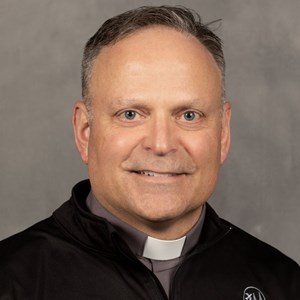
I speak as an ordained permanent deacon whose primary ministry is Catholic healthcare, diocesan public policy, and parish life. I also speak as a husband to Renee, as a father to Michael and Lindsay and their spouses, Rachel and Wade, and now as a grandfather to Whitney Lynn and Caden Anthony.
Those relationships are not separate from theology. They are where theology is tested first. Before theology is lived in ministry, it must become real in patience, sacrifice, forgiveness, and the daily decision to remain faithful.
I am grateful to Saint Meinrad.
This place, “the Hill,” welcomed us into a living Benedictine tradition.
St. Benedict begins his Rule with one word: “Listen.” Listen with the ear of the heart.
That is what Saint Meinrad asked of us. Listen to Scripture. Listen to the Church. Listen to those who suffer. Listen for the quiet movement of the Holy Spirit.
Here, theology demanded academic rigor, but it was also meant to become prayer, pastoral judgment, service, and a life ordered toward Christ. Saint Meinrad required clarity and discipline. It taught us to think with the Church, to pray with the Church, and to live with greater faithfulness.
We learned that wisdom is received, tested, lived, corrected, and handed on. That is the Benedictine gift of this place: prayer and work, community and humility, study and conversion, truth and charity.
St. Meinrad, our patron, teaches us something more.
He was known for prayer, solitude, wisdom, and counsel. People came to him with spiritual and human needs. Even in solitude, he received them with charity. He attended to their needs, both physical and spiritual.
In the end, he offered hospitality even to the men who would take his life. That is why he is remembered as the Martyr of Hospitality.